- Tel: +86 523 8961 9888
- Email: wendy@teflon-fabric.cn
Keywords: PTFE Fiberglass, PTFE Adhesive Tapes
PTFE coated mesh fabrics are heat-resistant, non-stick industrial textiles made by coating fiberglass or similar base mesh with polytetrafluoroethylene (PTFE). In real-world production, they are used for conveyor belts, release sheets, drying screens, filtration media, and thermal insulation components where stable performance matters. For businesses, customization is valuable because the right PTFE Mesh Fabrics specification can improve line efficiency, reduce downtime, and support exact process requirements with tighter tolerances and better yield.
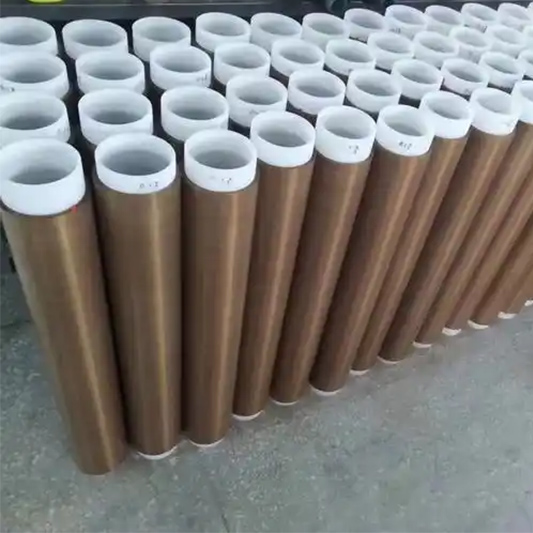
The short answer is yes—PTFE Mesh Fabrics can be customized in multiple dimensions, including mesh count, weave pattern, coating thickness, width, thickness, edge reinforcement, color, slit size, and mechanical properties. In industrial manufacturing, customization is often the difference between a material that “works” and one that performs consistently under heat, tension, and chemical exposure.
At JVC, customization is typically supported by controlled production parameters, such as:
For buyers comparing PTFE Mesh Fabrics suppliers, these details matter because they directly affect runnability, product release, and lifecycle cost.
PTFE entered industrial use because of its unique properties: low friction, high temperature resistance, chemical inertness, and excellent release performance. When PTFE is bonded to a mesh substrate, the result is a durable material that combines structural support with surface functionality.
Historically, PTFE Mesh Fabrics gained traction in sectors like:
As production lines became faster and more specialized, standard-size products were no longer enough. That is why PTFE Coated Open Mesh Fabrics evolved into a customizable industrial solution rather than a one-size-fits-all product.
Not every buyer needs the same specification. In practice, PTFE Mesh Fabrics can be tailored to fit the target application and equipment.
Mesh count and aperture
Base fabric selection
Coating thickness
Width and length
Edge treatment
Surface finish
Temperature and chemical resistance profile
These options make PTFE Mesh Fabrics highly adaptable for OEMs, converters, and industrial processors.
The reason businesses choose customized PTFE Mesh Fabrics is simple: better process fit usually means better output.
Custom PTFE Mesh Fabrics are used in baking, drying, and freezing lines because they offer excellent release and hygiene-friendly operation. A correctly specified mesh can reduce product sticking and help maintain consistent throughput.
For curing and lamination, PTFE coated mesh fabrics support heat transfer while resisting resin buildup. This can improve demolding consistency and reduce cleaning cycles.
Customized belts made from PTFE Mesh Fabrics can withstand continuous thermal exposure, helping packaging lines maintain stable sealing performance.
The mesh structure allows air passage while maintaining surface stability, which is useful in dryer sections and transfer systems.
In each case, customization is not just a feature—it is a production advantage.
Even experienced buyers sometimes make avoidable mistakes when sourcing PTFE Mesh Fabrics. Clarifying these issues early can save cost and lead time.
They are not. Mesh aperture, weave density, coating load, and edge finishing all affect performance. Two rolls may look similar but behave very differently in tensioned systems.
Not necessarily. A thicker coating may improve abrasion resistance, but it can also reduce flexibility and increase tracking resistance. The correct build depends on the machine speed and temperature profile.
In reality, customization for PTFE Mesh Fabrics often includes technical parameters such as tensile strength, permeability, and thermal stability, not just cut size.
Professional sourcing should always reference testing and inspection standards. Depending on the application, ASTM or DIN methods may be used to verify tensile strength, thickness, and dimensional stability.
To make customization predictable, JVC follows a structured process:
Requirement review
Material recommendation
Prototype or sample confirmation
Precision manufacturing
Inspection and verification
Packing and delivery
This workflow helps buyers move from concept to production with lower risk and clearer communication.
| Custom Item | What It Affects | Typical Business Benefit |
|---|---|---|
| Mesh aperture | Airflow, drainage, release | Better drying and less sticking |
| Coating thickness | Wear life, non-stick performance | Lower replacement frequency |
| Edge reinforcement | Tracking stability, fray resistance | Reduced downtime |
| Roll width | Material utilization | Less trimming waste |
| Surface finish | Release and friction | Improved process consistency |
| Base fabric | Strength and heat resistance | Better load performance |
This table shows why PTFE Mesh Fabrics should be specified by application, not just by appearance.
A bakery line needed a belt that could handle continuous heat exposure without product adhesion. The existing belt caused frequent stoppages and cleaning interruptions.
After switching to customized PTFE coated open mesh fabrics from JVC, the client adjusted:
As a result, the line reduced cleaning interruptions and improved operational consistency. This is a typical case where tailored PTFE Mesh Fabrics deliver measurable process improvement.
A textile processor needed better moisture evacuation in a dryer section. Standard material restricted airflow and caused uneven drying.
By using customized PTFE Mesh Fabrics with a more suitable aperture and heat-resistant base structure, the line achieved more uniform drying performance. The buyer also benefited from tighter dimensional control, with cut accuracy maintained to 0.01mm on critical sizes.
This kind of application shows how PTFE Mesh Fabrics can solve both mechanical and thermal challenges at once.
Before placing an order for PTFE Mesh Fabrics, confirm the following:
If you share these details early, suppliers like JVC can recommend a more accurate solution and shorten the approval cycle.
For manufacturers, the value of customization is not only technical. It is commercial.
Better-matched PTFE Mesh Fabrics can:
That is why buyers increasingly ask not just whether PTFE Mesh Fabrics are available, but whether they can be made to fit the process exactly.
So, can PTFE coated mesh fabrics be customized? Absolutely. From mesh structure and coating thickness to width, edge treatment, and inspection criteria, PTFE Mesh Fabrics are highly adaptable for demanding industrial environments. With the right specification, tested to recognized standards and supported by reliable manufacturing control, they become a practical solution for performance, efficiency, and long-term value.
If you are sourcing PTFE Mesh Fabrics, PTFE coated open mesh fabrics, or related customized industrial materials, JVC can help you define the correct build, confirm technical requirements within 24 hours, and deliver a solution aligned with your production needs.
Copyright © Jiangsu Vichen Composite Material Co., Ltd. All Rights Reserved. | Sitemap | Technical Support: