- Tel: +86 523 8961 9888
- Email: wendy@teflon-fabric.cn
Keywords: PTFE Fiberglass, PTFE Adhesive Tapes
When people ask “Are PTFE mesh fabrics safe for food contact?” they are usually asking whether PTFE Mesh Fabrics can be used on food-processing equipment, baking conveyors, drying lines, or release surfaces without contaminating product or affecting food quality. In simple terms, PTFE Mesh Fabrics are woven fiberglass or polymer meshes coated with polytetrafluoroethylene (PTFE), a low-friction, non-stick fluoropolymer widely used in food manufacturing because it resists heat, sticks less, and is easy to clean. For businesses, this matters because the right food-grade mesh can improve throughput, reduce scrap, and support hygienic processing with less downtime.
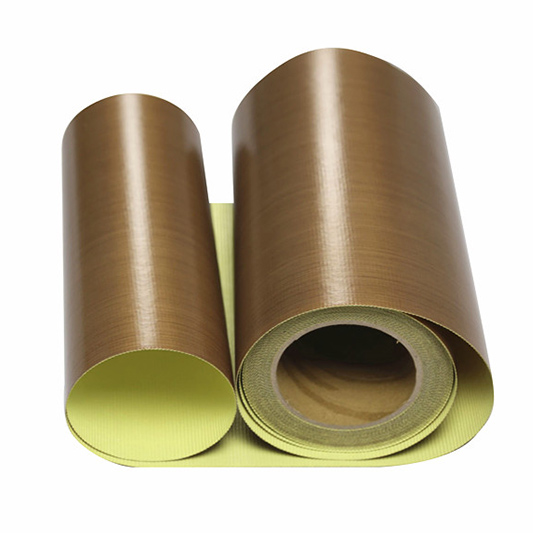
PTFE Mesh Fabrics are not just “non-stick cloth.” In industrial terms, they are engineered conveyor and release materials designed for thermal stability, chemical resistance, and low surface energy. In food plants, they are commonly used in baking ovens, dehydration tunnels, toast lines, and drying chambers where product release and airflow are critical.
The business value is straightforward:
For manufacturers, that means PTFE Coated Open Mesh Fabrics can directly support productivity and quality control when specified correctly.
PTFE was first commercialized for industrial applications because of its exceptional chemical inertness and thermal resistance. Over time, fabric reinforcement and open-mesh constructions made it useful for conveyor and drying systems. As food factories modernized, PTFE Mesh Fabrics became a preferred material for zones where metal belts were too heavy or where release performance was insufficient.
Today, the food industry relies on these materials not only for performance but also for compliance. Reputable suppliers such as JVC focus on controlled coating thickness, dimensional stability, and traceable raw materials so the final product meets food-processing demands.
Modern production lines often require:
These are not marketing claims; they are practical manufacturing controls that determine whether PTFE Mesh Fabrics are fit for food-contact environments.
The short answer is: they can be safe for food contact when they are manufactured, tested, and used according to food-grade requirements.
Safety depends on several factors:
In food applications, a qualified PTFE mesh fabric for food contact should be supported by compliance data and testing against relevant standards. Depending on the market, this may include:
In addition, credible suppliers may reference testing methods such as:
When these controls are in place, PTFE Mesh Fabrics are widely used in bakery, confectionery, snack, and drying applications without direct food safety issues.
The biggest advantage of PTFE Mesh Fabrics is not just “non-stick.” It is process stability.
In bakery lines, dough, batter, and sugar-based products often stick to standard belts. PTFE Mesh Fabrics reduce adhesion and help maintain clean product release.
Open-mesh construction promotes airflow, making PTFE Coated Open Mesh Fabrics suitable for fruit drying, herb dehydration, and low-moisture food processing.
Because the structure is porous, these fabrics allow hot air to circulate efficiently, improving drying uniformity.
They are used on release liners and auxiliary platforms where food must not bond to the surface.
In selected systems, PTFE Mesh Fabrics can tolerate continuous elevated temperatures, depending on the substrate and coating design.
This is why many plants choose PTFE mesh fabric for food processing over generic fabrics: the performance benefit is measurable in yield, line speed, and cleaning labor.
Many users hear “PTFE” and assume all PTFE products are automatically food safe. That is a common mistake.
Not true. Food-contact safety depends on the full construction, not only the coating chemistry. The fabric substrate, binders, and additives matter.
Also false. Non-stick behavior does not equal regulatory compliance. A PTFE mesh fabric for food contact should be supported by test reports and declarations.
Not necessarily. Operating above the recommended range may accelerate coating degradation and affect food-contact safety.
Mesh aperture influences airflow, product support, and residue retention. The wrong mesh specification can reduce yield or create cleaning challenges.
Quality varies widely. Look for controlled production, documentation, and 100% inspection practices, especially in PTFE Mesh Fabrics intended for regulated food environments.
Before purchasing PTFE Mesh Fabrics, ask for the following:
A trusted supplier like JVC should be able to explain the full process clearly and provide a 24-hour response for technical questions, especially when production downtime is at stake.
A mid-size bakery using a stainless steel conveyor experienced dough sticking, uneven release, and frequent cleaning stops. After switching to PTFE Mesh Fabrics with a controlled open-mesh design, the line achieved:
The plant also required dimensional verification to 0.01 mm tolerance on belt width and edge finishing, because even small deviations affected tracking stability. With the right PTFE Coated Open Mesh Fabrics, the bakery improved consistency and reduced maintenance interruptions.
This is a practical example of how PTFE mesh fabric for food processing can become a profit-supporting material, not just a consumable.
When selecting PTFE Mesh Fabrics, the supplier’s engineering and QA capability matter as much as the product itself.
A strong supplier should offer:
For B2B buyers, supplier credibility is built on evidence: test data, process control, and repeatable output. That is why brands like JVC emphasize industrial QC, technical transparency, and fast communication.
As food manufacturers push for higher hygiene standards, faster line speeds, and less waste, PTFE Mesh Fabrics continue to be a practical solution. Their value lies in the combination of non-stick performance, thermal stability, and open-mesh airflow.
In real-world terms, that means:
For buyers comparing options, PTFE mesh fabric for food contact should be evaluated by compliance, performance, and supplier reliability—not price alone.
So, are PTFE mesh fabrics safe for food contact? Yes, PTFE Mesh Fabrics can be safe when they are properly manufactured, tested, and used within the correct operating limits. The most reliable products come with documented food-contact compliance, controlled production, and consistent quality checks.
If you are sourcing PTFE Coated Open Mesh Fabrics for bakery, drying, or conveyor systems, focus on certification, test reports, and supplier expertise. Choosing a technically capable brand like JVC can help you reduce risk, improve line efficiency, and support long-term food safety performance.
If you want, I can also turn this into:
Copyright © Jiangsu Vichen Composite Material Co., Ltd. All Rights Reserved. | Sitemap | Technical Support: